Japan's MMX lifts off on H3 for a Phobos sample return
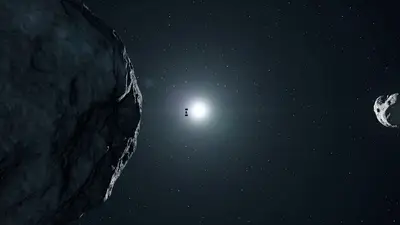
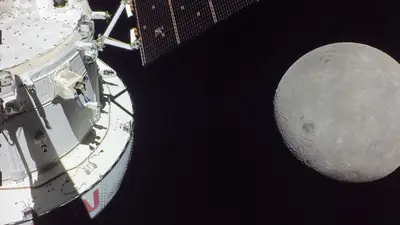
JAXA launched the Martian Moons eXploration spacecraft on H3 flight 10 from Tanegashima on Oct. 19 at 21:41 CEST. It carries the German-French Idefix rover and aims to return at least 10 g of Phobos to Earth in 2031.
Japan's space agency JAXA launched its Martian Moons eXploration (MMX) spacecraft aboard H3 flight No. 10 at 04:41:03 JST on October 20, 2026 (21:41 CEST on October 19) from the Tanegashima Space Center. JAXA said the rocket "flew as planned". Separation of MMX was confirmed about 71 minutes and 13 seconds after liftoff, and the spacecraft was injected into its planned Mars-transfer orbit.
The mission
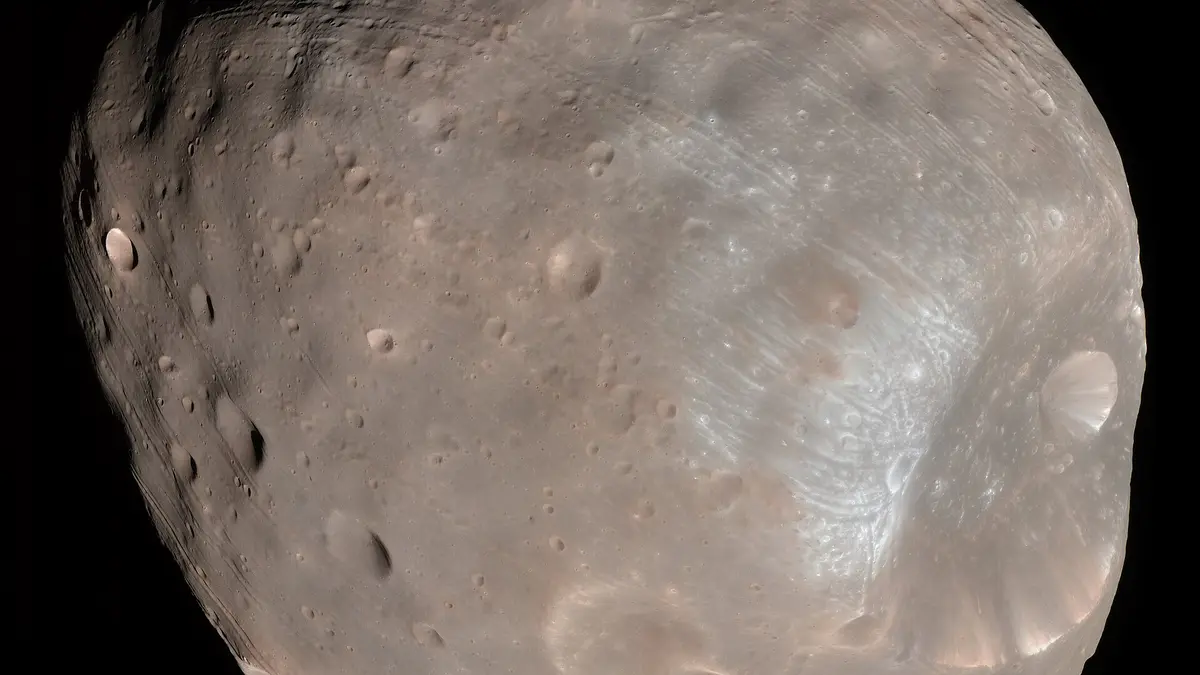
MMX is a sample-return mission to Phobos, the larger of Mars's two moons. JAXA leads it in collaboration with NASA, the French space agency CNES, the German Aerospace Center DLR and ESA. ESA lists several firsts for the mission:
- the first spacecraft to orbit Phobos, in a "quasi-satellite orbit";
- the first to collect samples from the surface of a moon other than our own;
- the first to return to Earth after visiting the Mars system.
DLR calls it the largest Solar System mission JAXA has undertaken.
Timeline (per ESA and DLR)
- August 2027: arrival in Mars orbit; Phobos orbit from September 2027.
- Around the turn of 2028/2029: release of the German-French Idefix rover from about 40–100 m above Phobos. It will explore the surface for about 100 days.
- 2030: the main spacecraft lands on Phobos to collect samples.
- 2031: the return capsule brings at least 10 g of Phobos material back to Earth, landing in Australia.
Why it matters
The key science question is where Phobos and Deimos came from. Are they captured asteroids, or debris from a giant impact on Mars? Beyond the science, ESA notes that round trips to the Mars system are a step toward future Mars sample return and crewed missions.
H3 is Japan's flagship launcher. A successful interplanetary mission adds to its record as Japan competes for government and commercial launches.
Track upcoming flights on the launch calendar.