
Rocket Lab pushes Neutron's first launch to 2027 after propellant-tank dome defect
Rocket Lab says Neutron's debut now moves into 2027 after voids were found in a carbon-composite first-stage tank dome. Here is what has to happen before a new date is set.
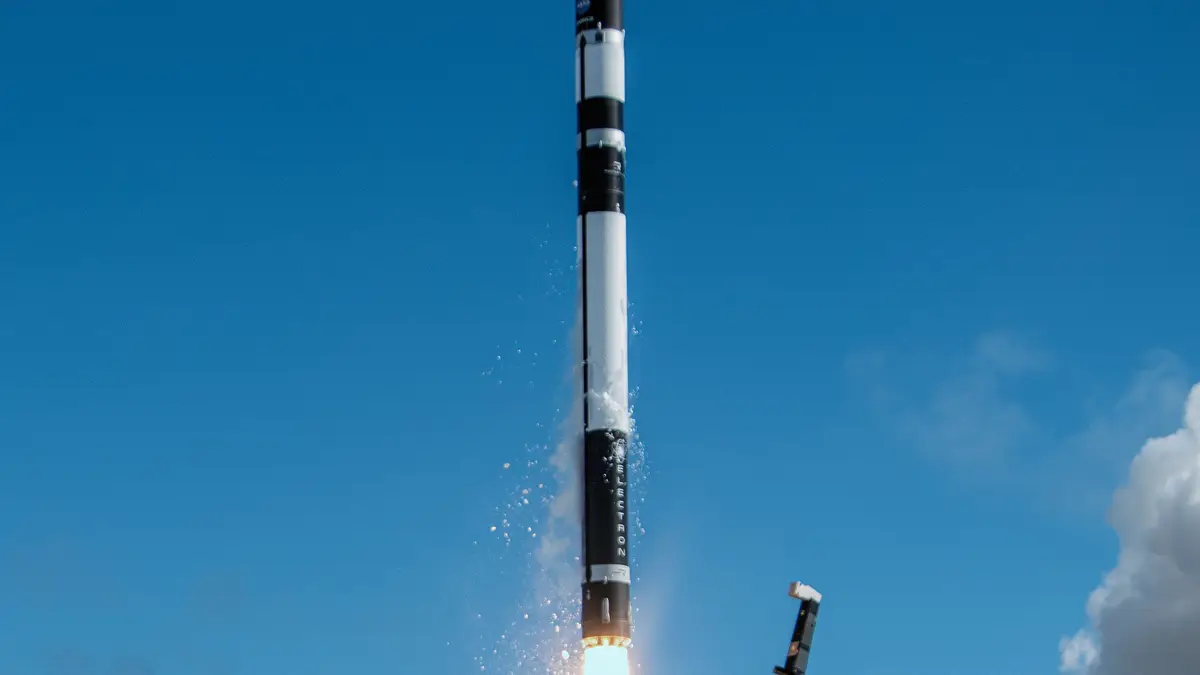
Rocket Lab has formally moved the debut of its Neutron medium-lift rocket into 2027. In a development update published on October 14, 2026, the company said the inaugural launch "is now expected to occur in 2027," and filed the announcement with the U.S. Securities and Exchange Commission as part of a Form 8-K.
For a company whose investment story increasingly leans on Neutron, the slip matters. Neutron is Rocket Lab's partially reusable, two-stage, medium-lift vehicle, designed to move the company beyond its small Electron rocket and into the market for larger payloads and constellation deployment.
What went wrong
According to CEO Peter Beck's update, the problem was found in the first stage's forward propellant-tank dome, a carbon-composite structure. Coverage of the update describes voids in the composite dome. Rocket Lab says it has identified and corrected the manufacturing issue, but investigating it and producing a replacement part pushed the first flight out of 2026.
Beck laid out the path before Rocket Lab will commit to a new target date:
- Build a new forward dome on the company's automated fiber placement (AFP) machine. That work is already underway.
- Cure the dome and inspect it with ultrasonic testing and other methods to confirm there are no voids or further issues.
- Assemble the forward and aft domes and components into the full first stage, then run a hydrostatic test campaign followed by a cryogenic test campaign.
Beck said that, if all goes well, Rocket Lab expects the first two steps to be done before the first quarter of 2027 and the third to wrap up within that quarter. Only then does the company expect to share a new launch date. That sequence is not a promise of a first-quarter launch; it is the gate before a date is announced.
Beck also said Rocket Lab is using the pause to bring forward upgrades to other parts of the vehicle planned for future flights, and that the second and third Neutron rockets are already being built before Flight 1.
Why carbon composite
Rocket Lab describes Neutron as the world's largest carbon-composite rocket. The company's argument is that composite structures need new manufacturing techniques that take time to perfect, but that the mass they save goes directly into payload performance, and that the processes should scale once mastered. The setback is in exactly the part of the program that makes it unusual: building very large composite tank structures reliably.
The market reaction
Investors did not take the news well. Outer Space Today reported Rocket Lab shares (Nasdaq: RKLB) down 8.7% in after-hours trading following the update, and the selling continued at the next session's open. For space-stock investors, the takeaway is that Neutron's schedule risk, long discussed, has now shown up in the official timeline.
What to watch
- Dome inspection results. The ultrasonic inspection of the rebuilt forward dome is the first hard checkpoint.
- Stage-level testing. Hydrostatic and cryogenic test campaigns on the assembled first stage, which Beck expects within Q1 2027.
- A firm date. Rocket Lab has said it will share progress through its website and social channels rather than give a date it might have to walk back.
The Cyborg view: a delay found on the ground costs less than one found in flight, but the medium-lift market is not waiting. Every quarter of slip is a quarter in which customers keep buying rides elsewhere.
Not financial advice.

_(cropped).jpg)