Novaspace: satcom services to hit $145B by 2035 as data overtakes video
Novaspace forecasts global satellite services revenue will grow 44% to $145 billion by 2035, with data services rising from 26% to 68% of the total and commercial GEO orders rebounding to 14 by mid-September 2026.
Global satellite services revenue will grow 44% to $145 billion by 2035, according to the 33rd edition of Paris-based consultancy Novaspace's Satellite Connectivity and Video Market report (confirmed, Novaspace press release, republished by SpaceNews on October 21). The main driver is data: connectivity services are forecast to reach nearly $100 billion, while TV video distribution shrinks in relative terms.
What happened
Key numbers from the report summary (confirmed, Novaspace):
| Metric | Forecast |
|---|---|
| Satellite services revenue, 2035 | $145B (+44% over the decade) |
| Data services revenue, 2035 | nearly $100B |
| Data share of services revenue | 26% today, 68% by 2035 |
| Satellite capacity market, 2035 | more than $46B (over 3x 2025) |
| Video distribution share of capacity revenue, 2035 | 3% |
- Growth leaders: consumer broadband is expected to add $22.6 billion of revenue over the decade, military satcom (milsatcom) $19.2 billion and enterprise networks $17.2 billion.
- GEO is back, differently: commercial geostationary satellite orders fell to six in 2024, rebounded to 10 in 2025 and reached 14 by mid-September 2026. Report editor Dimitri Buchs said "this is not a return to the traditional GEO model", pointing to software-defined satellites and multi-orbit strategies.
- Price pressure: Novaspace says falling bandwidth costs from high-throughput and non-geostationary (NGSO) systems are letting providers such as Starlink compete with terrestrial broadband on price.
Why it matters for space investors
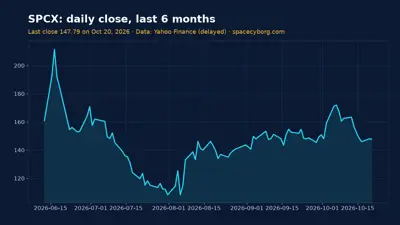
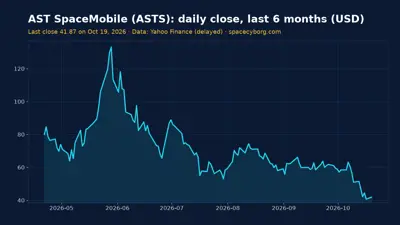
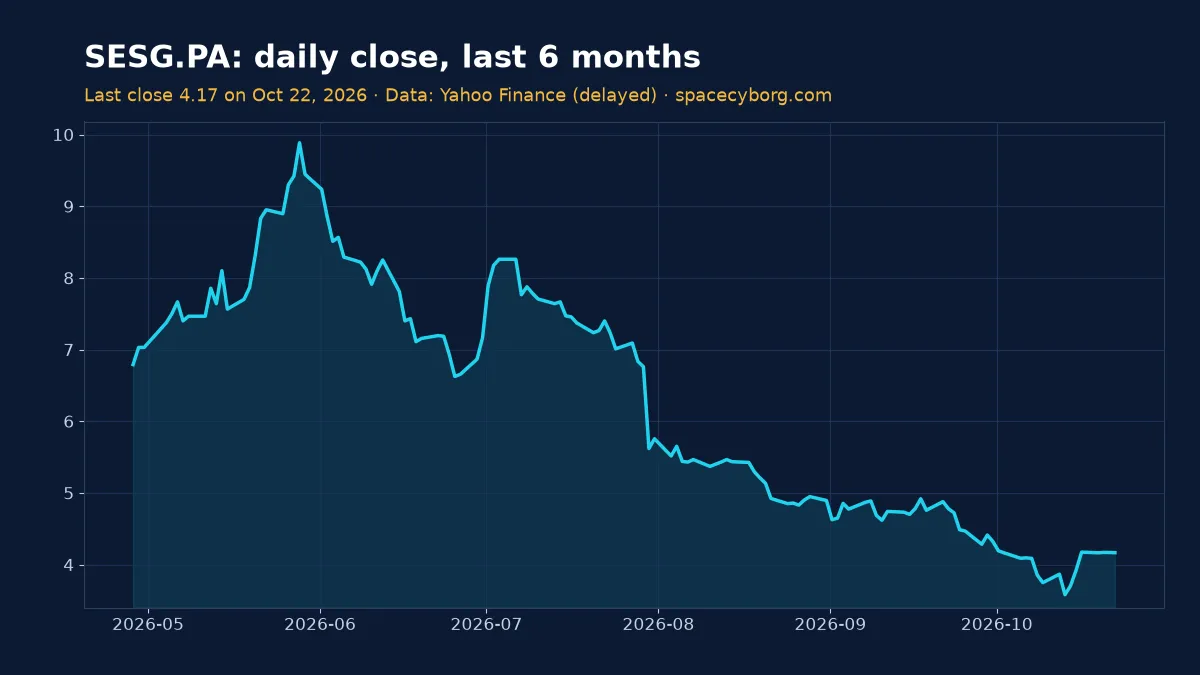
The forecast backs two themes we follow on the space stocks page. First, low-orbit broadband and defence connectivity are where the new money is, which favours SpaceX (Starlink), AST SpaceMobile, Iridium and Viasat, and puts milsatcom budgets at the centre of the story. Second, legacy video-heavy operators such as SES (chart above) and Eutelsat must keep shifting their revenue to data and multi-orbit services, since video distribution is forecast to fall to just 3% of capacity revenue.
The rebound in GEO orders suggests the geostationary manufacturers and operators are not finished, but the report frames GEO as one layer in a multi-orbit mix rather than a recovery of the old model. These are forecasts from a paid report, not company guidance. Not financial advice.