ESA orders four more Galileo Second Generation satellites, taking the G2 fleet to 16
ESA has extended its Galileo Second Generation contracts with Thales Alenia Space and Airbus for four more satellites, growing the planned G2 fleet from 12 to 16.
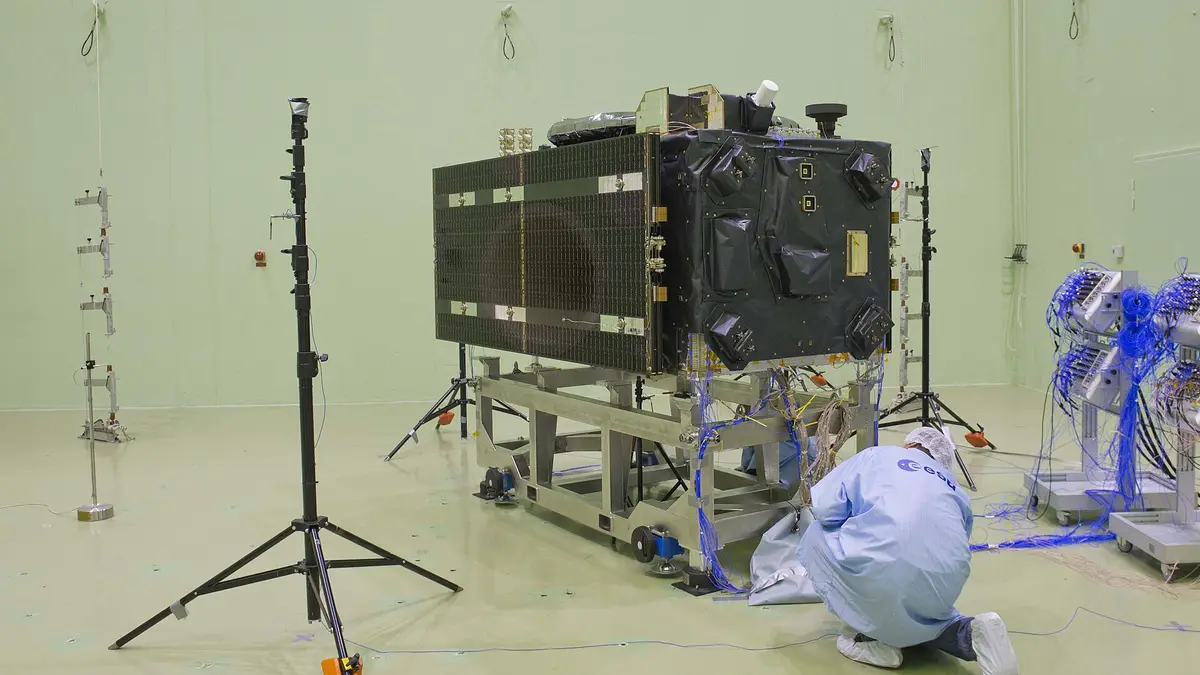
The European Space Agency said on 27 October 2026 that it has extended its Galileo Second Generation (G2) contracts to build four additional satellites, two each from Thales Alenia Space in Italy and Airbus Defence and Space in Germany. The order takes the G2 fleet from 12 to 16 spacecraft.
What happened
- Contracts signed: ESA signed the extensions on 23 October in Rome (Thales Alenia Space) and on 26 October in Ottobrunn (Airbus), acting on behalf of the EU Agency for the Space Programme (EUSPA) for the European Union, which owns Galileo (confirmed, ESA).
- Eight each: Both primes have built G2 under ESA contracts since 2021, with six satellites each. They now have eight apiece (confirmed by Thales Alenia Space and Airbus).
- Timeline: The four new satellites are identical to those already in development. They are due for delivery in 2031 and will launch right after. ESA says the first G2 satellites will be integrated and flight-tested in 2027, ahead of the first G2 launch in 2028.
- Technology: G2 spacecraft carry fully digital navigation payloads that can be reconfigured in orbit, improved navigation antennas, inter-satellite links and an upgraded atomic-clock setup. Airbus says each satellite will weigh more than two tonnes, include anti-jamming and anti-spoofing features and operate for 15 years.
- Value: None of the three announcements gives a contract value.
The new satellites will join Galileo's 38 first-generation satellites, all but four of which have already launched, according to ESA.
Why it matters for space investors
Galileo is one of the largest recurring institutional satellite programmes in Europe, and this order adds work to the backlogs of the two primes through 2031. Thales Alenia Space is a joint venture between Thales (67%) and Leonardo (33%), and Airbus will spread the work across sites in Germany, Spain and France. Four satellites are unlikely to move either group's revenue much. The order still adds to the shift in European spending towards "strategic autonomy" in navigation and security, a theme that also drives launch demand for Ariane 6. With the first G2 launch planned for 2028, it is a long-dated programme to keep an eye on. Upcoming launches are on our launch calendar, and listed space names are in our space stocks overview.
Not financial advice.