NASA's Moon plan, decoded: Starship will push Orion to the Moon and Blue Moon gets three tug stages
At its October 23 briefing NASA kept Artemis III in mid-2027 and two crewed Moon landings in 2028, and revealed that Starship will push Orion to low lunar orbit while Blue Origin drops propellant transfer for three tug stages.
NASA leaders used their Artemis update at Kennedy Space Center on October 23 (20:00 CEST) to hold the line on dates: the Artemis III Earth-orbit test is still planned for mid-2027, and Artemis IV and V are meant to land astronauts near the lunar South Pole in 2028 (reported, SpacePolicyOnline). Alongside the briefing, NASA published a revised plan for how both commercial landers will actually get crews to the Moon (confirmed, NASA).
What happened
- No more halo orbit: Orion and the landers will no longer meet in the near-rectilinear halo orbit around the Moon. Each provider now gets its own rendezvous orbit, chosen to suit its vehicle (confirmed, NASA).
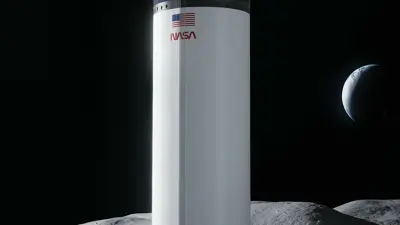
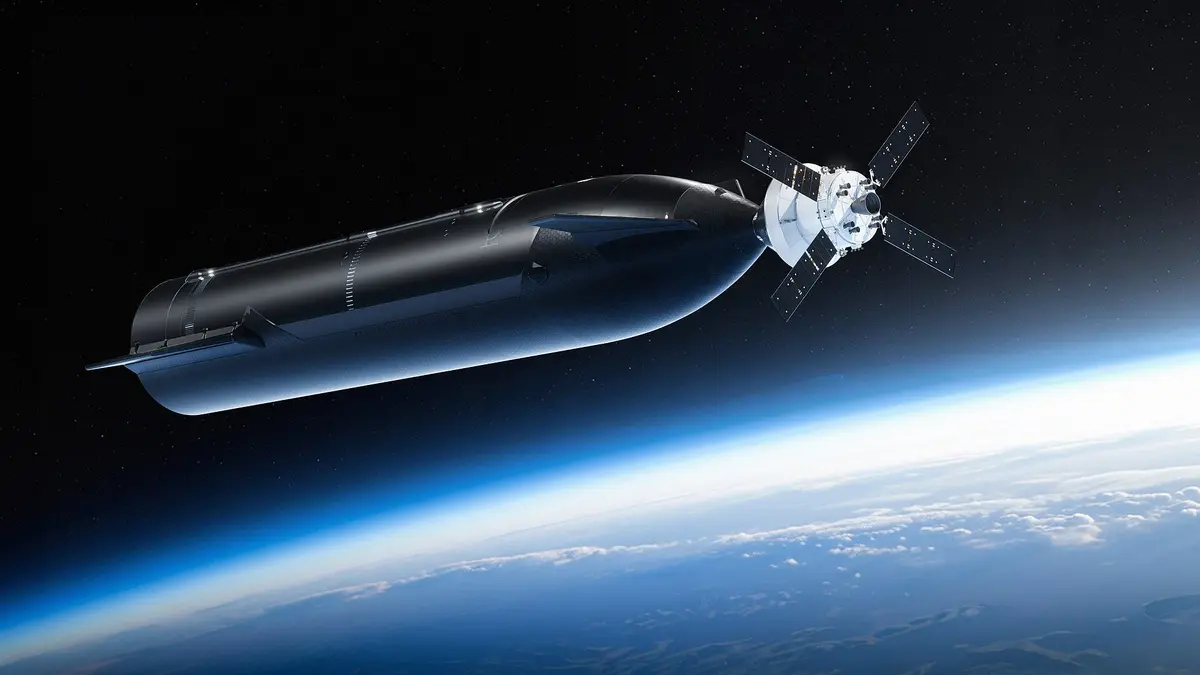
- Starship pushes Orion: SpaceX still plans to fill a "depot" Starship in low Earth orbit with several tanker flights. Under the new plan, Starship HLS waits for Orion in Earth orbit, docks with it, and then fires the trans-lunar injection burn to carry the combined stack to low lunar orbit. NASA says it is modifying Orion so Starship can push it, and that the change "will significantly lower" the propellant Starship must gather in orbit (confirmed, NASA). In-space cryogenic transfer has never been demonstrated; SpaceX expects a first test early next year and an uncrewed lunar landing test in late 2027 (reported, SpacePolicyOnline).
- Blue Origin defers refuelling: for its accelerated 2028 landing, Blue Origin will skip propellant transfer and use three transfer stages, based on existing Mark 1 and Mark 2 hardware, to send the Blue Moon Mark 2 "Alpha" lander to an elliptical polar orbit around the Moon, dropping each stage as it empties (confirmed, NASA).
- Who lands first is open: neither provider is assigned to a specific landing. NASA will pick the first lander based on readiness, with a second crewed landing to follow; both must fly an uncrewed demonstration first (confirmed, NASA). SpaceX is adding two demonstrations of its "Cabin 1" crew cabin, and Blue Origin is adding human-in-the-loop testing milestones.
- Artemis III in detail: a Blue Moon Mark 2 test article launches first to an orbit of about 273 miles (440 km) and can wait up to 30 days. Orion follows on SLS days later, docks with it, and the crew of Randy Bresnik, Frank Rubio, Andre Douglas and ESA's Luca Parmitano spends about two days inside. A Starship Version 3 test article then launches for a docking of up to two hours, which the crew will not enter. The mission is planned to last 14 days and end with a Pacific splashdown off California (confirmed, NASA).
- Shorter Moonwalks: NASA is targeting two Moonwalks of about two hours each on the first landings, using Axiom Space suits; the agency recently accepted a simpler, lighter "sortie" suit (confirmed, NASA; reported, SpacePolicyOnline).
Why it matters for space investors
The briefing came a day after NASA's safety panel urged a rethink of Artemis IV, which we covered in our ASAP story, and NASA's answer was to change the mission plan rather than the dates. Letting Starship carry Orion to the Moon cuts the number of tanker flights SpaceX needs, which is central to Starship's lunar economics, while Blue Origin's tug approach removes refuelling from its critical path entirely, turning the 2028 landing into a real race between the two. Suppliers tied to SLS and Orion, such as Northrop Grumman, Boeing and Lockheed Martin, keep a defined role, and robotic lander companies like Intuitive Machines gain weight because NASA says more South Pole data must come from commercial landers before the site is final. Dates for Artemis III and the Starship tests will be tracked on our launch calendar.
Not financial advice.