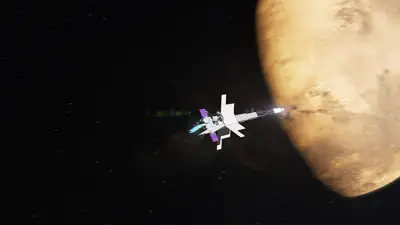
NASA's Swift observatory ends its mission after nearly 22 years, weeks after a failed commercial rescue
NASA's Neil Gehrels Swift Observatory made its last observation on October 20 after sinking below 275 km, leaving more than 2,000 gamma-ray bursts and about 7,000 papers behind, two months after Katalyst's LINK rescue mission had to drop its capture-and-boost attempt.
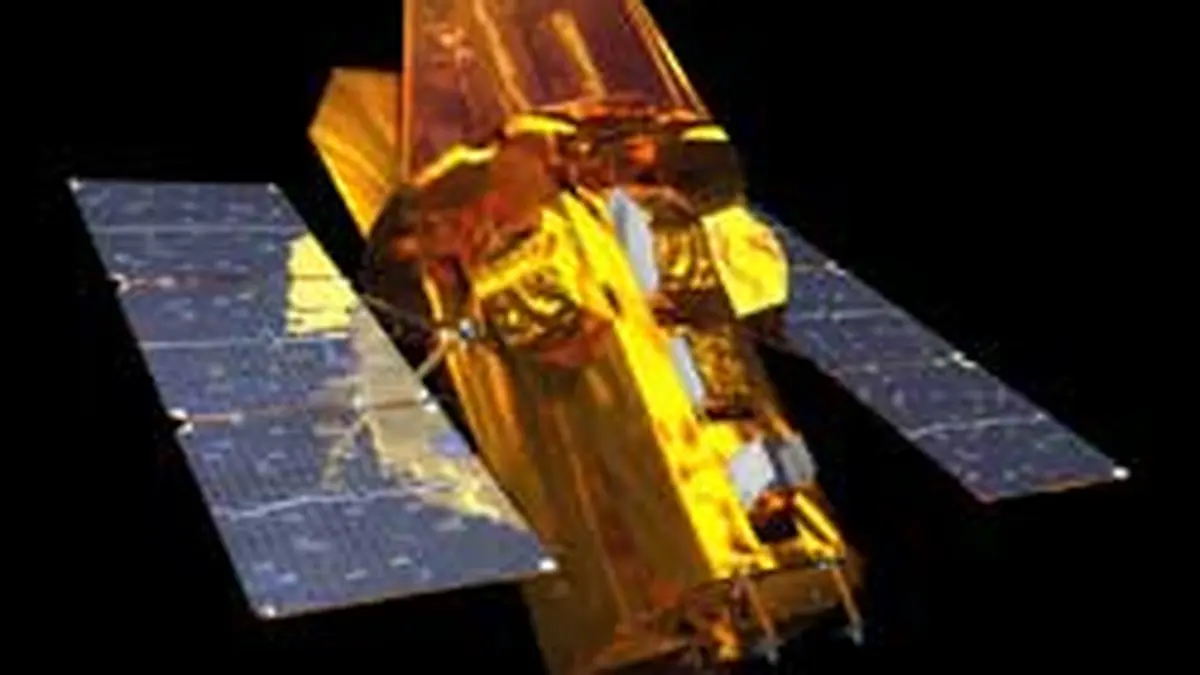
NASA said on October 23 that its Neil Gehrels Swift Observatory has ended its science mission. Swift made its final observation on October 20, when it had sunk to 275 km (171 miles) and could no longer hold its telescopes steady against atmospheric drag; it is expected to re-enter the atmosphere in the next few weeks (confirmed, NASA).
What happened
- End of a long run: Swift launched on November 20, 2004, for a two-year primary mission and kept working for almost 22 years. NASA credits it with more than 2,000 gamma-ray bursts, more than 1,400 supernovae and about 7,000 published papers. Its public archive is about 12 terabytes and includes more than 1.5 million ultraviolet/optical images (confirmed, NASA).
- Why it fell: recent solar activity increased drag on Swift's low Earth orbit. When it reached 275 km on October 20 the spacecraft entered safe mode, and the Penn State operations team sent a command that ended operations to prepare it for re-entry (confirmed, NASA).
- The rescue that didn't happen: in September 2025 NASA hired Katalyst Space to build a robotic servicing spacecraft in under a year to capture and boost Swift. LINK launched on July 3, 2026, on a Northrop Grumman Pegasus XL, but an attitude control anomaly led NASA and Katalyst to drop the capture and boost in August (confirmed, NASA and Katalyst). LINK still deployed its three robotic arms and got within about 12 to 15 km of Swift before Katalyst ended the mission on September 25 after 85 days in orbit (confirmed, Katalyst).
- What comes next: NASA says it will use its existing telescopes to cover rapid-response observations for now, and is looking at "fast-to-orbit commercial capabilities" and new missions for a post-Swift world (confirmed, NASA).
Why it matters for space investors
Swift's end is a clear example of how solar activity can shorten the life of satellites in low orbit, a cost that falls on every operator in that band. The failed rescue also shows how far commercial in-orbit servicing still has to go: Katalyst built and launched LINK in less than nine months, but the capture was never attempted. NASA's interest in "fast-to-orbit" commercial options keeps the door open for small launch and rapid spacecraft companies such as Rocket Lab, while Northrop Grumman, which flew LINK on Pegasus, remains the established player in satellite servicing. More launches and missions are on our calendar.
Not financial advice.