CesiumAstro raises $730M Series D above $4.5B valuation, unveils Synchronicity constellation
Austin-based CesiumAstro closed a confirmed $730 million Series D at a valuation above $4.5 billion and unveiled Synchronicity, a planned 737-satellite AI-enabled constellation, after Element-1 began on-orbit operations.
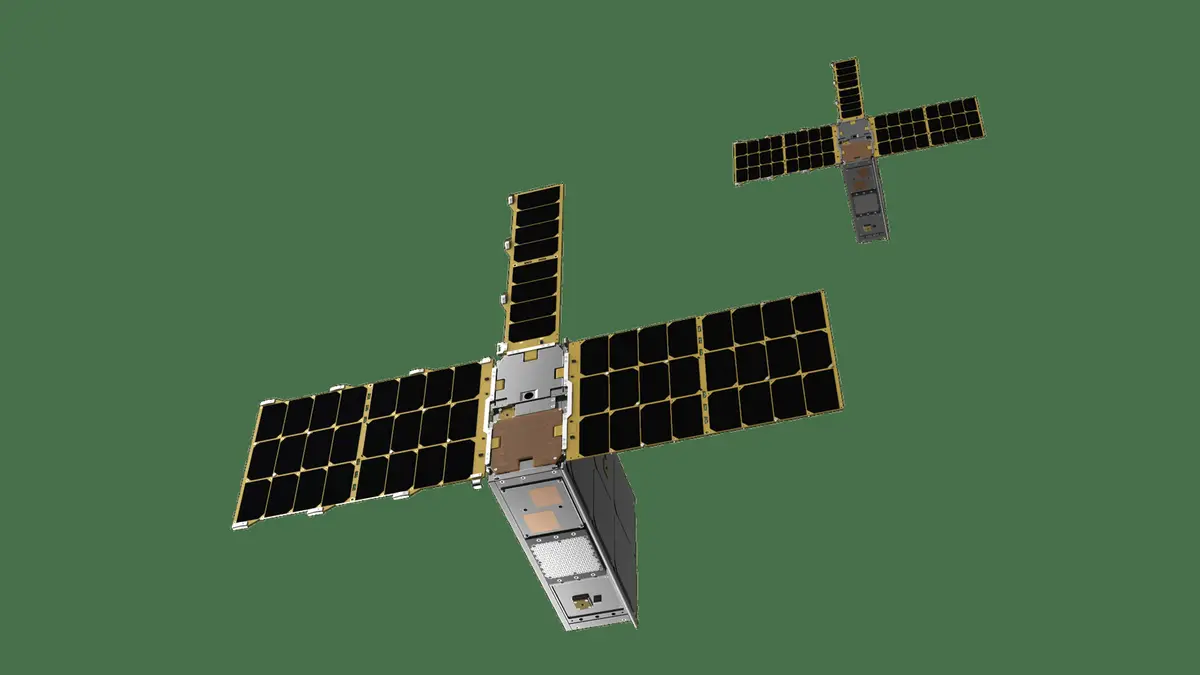
CesiumAstro said on November 5, 2026 that it has closed $730 million in Series D financing valuing the Austin space-and-defense communications company at more than $4.5 billion, and unveiled Synchronicity, a planned 737-satellite, AI-enabled constellation for commercial, sovereign and defense missions (confirmed, CesiumAstro). The raise follows the October launch of Element-1, the company’s first satellite, which has begun on-orbit operations (confirmed, CesiumAstro).
What happened
- The round: Janus Henderson led the equity round, with participation from Insight Partners, Sands Capital, Sumitomo Corporation of Americas, Woven Capital (Toyota’s growth fund), Incharge Capital, Magnetar, AV and NewSpace Capital. CesiumAstro also secured $100 million in debt from the Export-Import Bank of the United States (EXIM) and JPMorgan (confirmed, CesiumAstro). Payload reports the $730 million figure as $630 million equity plus the $100 million debt facility (reported, Payload).
- 2026 capital: the company says total capital announced in 2026 now exceeds $1.2 billion (confirmed, CesiumAstro).
- Synchronicity: a planned 737-satellite constellation with a multi-beam, multi-frequency architecture supporting Ku-, Ka- and V-band, onboard edge compute and multi-orbit operations. CesiumAstro says AI will handle network optimization and dynamic resource allocation; the constellation will use the firm’s vertically integrated stack (custom silicon, active phased arrays, software-defined payloads, processors, spacecraft, mission software and terminals) rather than assembling third-party parts (confirmed, CesiumAstro).
- Element program: Element-1 launched in October 2026 (Payload says on SpaceX Transporter-18) and validates CesiumAstro’s payloads, phased arrays, compute and spacecraft on orbit. It is the first of eight planned Element spacecraft, with seven more launches secured for the next phase; Payload cites launch windows between 2028 and 2029 for those follow-ons (confirmed, CesiumAstro; reported, Payload). CEO Shey Sabripour told Payload the company is targeting 350 satellites in orbit by 2032 and is still deciding launch partnerships (reported, Payload).
- Acquisitions (past 12 months): Jariet Technologies (mmWave RF-SoC semiconductors), 1Aardvark (mission software for national-defense programs) and Vidrovr (real-time multimodal AI signal analysis) (confirmed, CesiumAstro).
- Austin expansion: $500 million over five years to expand the Austin-area headquarters, including purchase of 270,000 square feet of advanced manufacturing space; plans to add 550 jobs and grow the Austin-area workforce to more than 1,000 by 2030. Additional U.S. sites include Colorado, California, Alabama, Florida and the Washington, D.C. area; international presence spans the UK, Germany, Switzerland, Taiwan, Singapore and Japan (confirmed, CesiumAstro).
Why it matters for space investors
A private valuation above $4.5 billion for a satcom hardware specialist pivoting into its own constellation sits among the largest recent U.S. space raises and shows capital still chasing vertically integrated communications and edge-compute stacks. Synchronicity would put CesiumAstro into the same competitive arena as broadband and defense LEO networks, while Element-1’s on-orbit start is the near-term proof point after nearly a decade of IP build-out.
CesiumAstro is private, so there is no ticker. Listed names exposed to related satcom, ground and launch themes include Viasat, AST SpaceMobile, EchoStar/Hughes (GSAT) and rideshare/launch demand through SpaceX and Rocket Lab. The raise echoes other large private rounds covered recently, including Northwood Space’s $375M Series C on the ground-network side and Astranis’s dedicated Falcon 9 Block 4 path for microGEO capacity. Watch Element follow-on launches (see our launch calendar) and whether Synchronicity’s 350-by-2032 goal attracts named launch or sovereign customers.
Not financial advice.