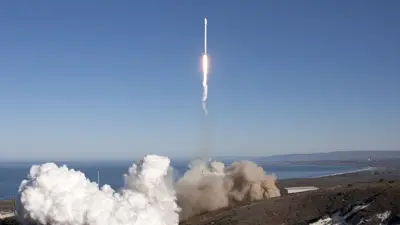
NASA's VADR 'buy now, payload later' Moon Base orders: $1.3B for Falcon 9, New Glenn and Terran R missions
NASA awarded six VADR task orders worth about $1.3 billion to Arrow Science and Technology, Blue Origin and Impulse Space, using Falcon 9, New Glenn and Terran R for Moon Base cargo from 2028.
NASA awarded six task orders worth approximately $1.3 billion combined under its Venture-Class Acquisition of Dedicated and Rideshare (VADR) launch contract on Saturday, November 7, 2026, according to the agency's press release (confirmed). The orders, announced at the MAX POWER event, go to Arrow Science and Technology, Blue Origin and Impulse Space to integrate and transport Moon Base cargo.
What happened
- Contract size (confirmed): The six task orders fall under the 10-year VADR indefinite-delivery/indefinite-quantity contract, which has a maximum total value of $5 billion across all contracts. VADR is managed by NASA's Launch Services Program Office at Kennedy Space Center.
- Rockets and tugs (confirmed): Missions will fly on Blue Origin's New Glenn, Relativity Space's Terran R and SpaceX's Falcon 9, with in-space transportation from Blue Origin, Firefly Aerospace, Impulse Space and Quantum Space.
- Mission split (reported by Payload): Falcon 9 flies two missions, one carrying CAPSTONE 02 on a Quantum Space Ranger tug (Arrow Science and Technology) and one carrying Intuitive Machines communications satellites (Impulse). New Glenn flies three, one using Firefly's Elytra tug to deliver three MoonFall drones and two using Blue Ring for cargo NASA has not yet picked. Terran R flies one, paired with Impulse's Helios kick stage and a lander.
- Impulse's share (confirmed by the company): Impulse said it won two firm-fixed-price task orders as prime contractor, with missions scheduled to begin in 2028. On the Terran R mission the lander will drop NASA payloads in cislunar orbit and then perform a descent profile to test larger cargo delivery to the lunar surface.
- New buying model (reported): Administrator Jared Isaacman said that under CLPS "it's all or nothing," while the new approach adds flexibility to "move pieces around." Payload describes it as a buy-now, payload-later approach that lets NASA reshuffle cargo as hardware matures.
Why it matters for space investors
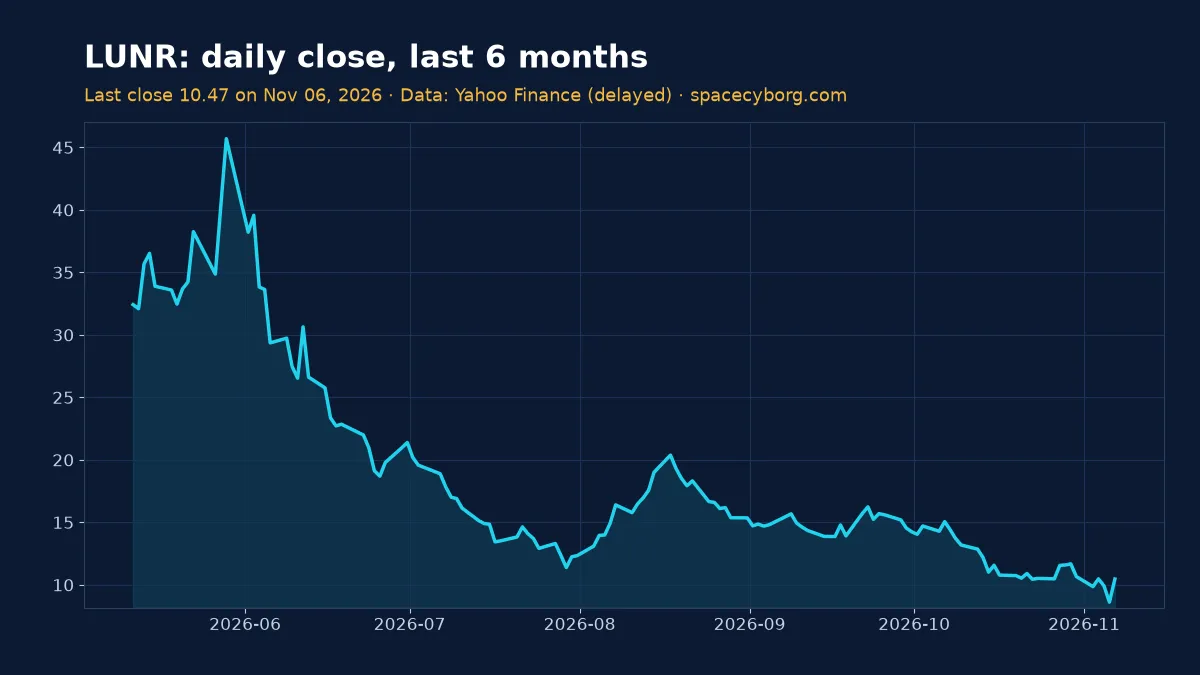
The awards spread Moon Base transport work across three launch providers and several in-space vehicle makers, and most winners are private companies, so listed exposure is indirect. Intuitive Machines (LUNR) is named as a customer whose communications satellites will ride on an Impulse mission, and the CLPS 2 selections announced the same day widen the lander pool. Both contracts are ceilings, and revenue only arrives as individual task orders are awarded and flown, with first missions in 2028. See the earnings calendar for upcoming company updates.
Not financial advice.