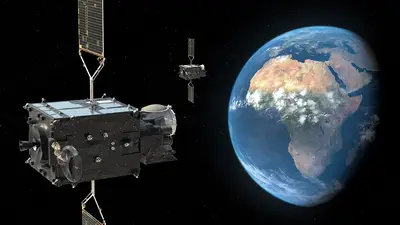
HPE's Spaceborne Computer-4 will run the first AI and supercomputing benchmarks on the Moon
HPE says its fanless Spaceborne Computer-4 will ride Astrolab's FLIP rover to the lunar South Pole on a NASA CLPS mission planned for late 2026, testing large language models, LiDAR processing and the first high performance computing benchmarks on the Moon.
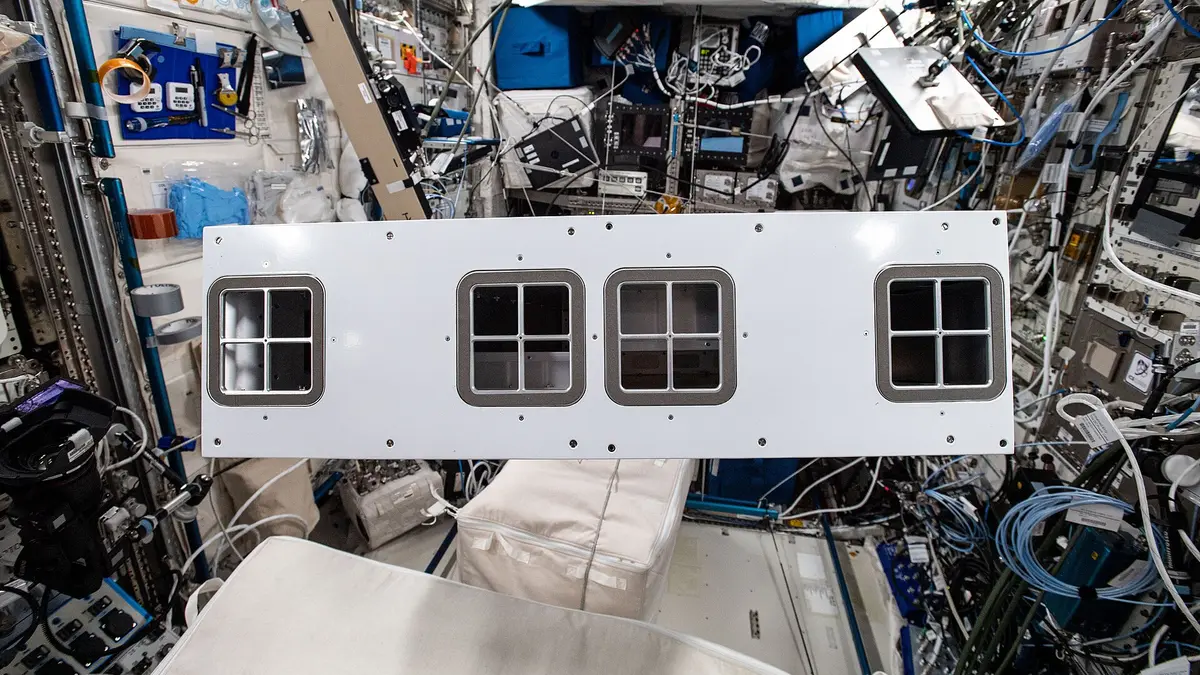
Hewlett Packard Enterprise (HPE) announced on October 20 (16:00 CEST) that Spaceborne Computer-4, a compute module built for space, will fly on Astrolab's FLIP rover to the lunar South Pole region and run AI workloads and what HPE calls the first high performance computing benchmarks on the Moon's surface (confirmed, HPE). The mission is planned to launch in late 2026 under NASA's Commercial Lunar Payload Services (CLPS) programme, with Voyager Technologies' Griffin-1 lander carrying the rover (confirmed, HPE; NASA).
What happened
- What it will test: large language models using retrieval-augmented generation, vision inference on camera data, LiDAR processing for mapping, navigation and terrain analysis, autonomous monitoring, and an "AI services container" to show AI applications can be deployed reliably on the Moon (confirmed, HPE).
- Who runs workloads: NASA, Deloitte and HPE all plan to deploy AI workloads on the computer, and HPE will also support Astrolab's mission control with its software (confirmed, HPE).
- The hardware: a lightweight, self-contained, fanless module with a low-power CPU and GPU, using KIOXIA solid-state flash storage, designed for the harsh conditions of the lunar South Pole (confirmed, HPE).
- Fourth generation: earlier Spaceborne Computers flew to the International Space Station in 2017, 2021 and 2024, but Computer-4 is the first to operate in the vacuum of space rather than inside a pressurised station (reported, Payload).
- The rover: FLIP (FLEX Lunar Innovation Platform) weighs 480 kg, carries 20 payloads including a LiDAR 3D mapper and a helium-3 sensor, and is designed to survive at least 150 hours of lunar night; MIT Technology Review says it could head to the Moon as early as November 2026 (reported, MIT Technology Review). NASA says FLIP also serves as a testbed for subsystems of Astrolab's crewed lunar rover, CLV-1 (confirmed, NASA).
Why it matters for space investors
Edge AI is moving from Earth-orbit demos to the lunar surface. Processing data on the rover means it can decide what is worth sending home instead of downlinking everything over limited bandwidth, which is the same economic argument driving AI chips onto satellites. For HPE the payload is a small, high-visibility marketing bet rather than a revenue line, but it puts a large IT vendor into the lunar supply chain next to Voyager Technologies, whose Griffin-1 mission carries the rover, and lander companies such as Intuitive Machines that sell CLPS rides. The key risk is schedule: lunar landers have repeatedly slipped and several have failed on landing, so watch Griffin-1's launch date on our launch calendar. NASA's wider Moon plans are covered in our Artemis briefing story.
Not financial advice.