ULA sets Nov. 13 Vulcan return to flight with 40 Amazon Leo satellites after booster nozzle fix
United Launch Alliance targets Friday, November 13 for Vulcan's first flight in nine months, carrying 40 Amazon Leo satellites on six solid boosters with a redesigned nozzle after February's booster anomaly.
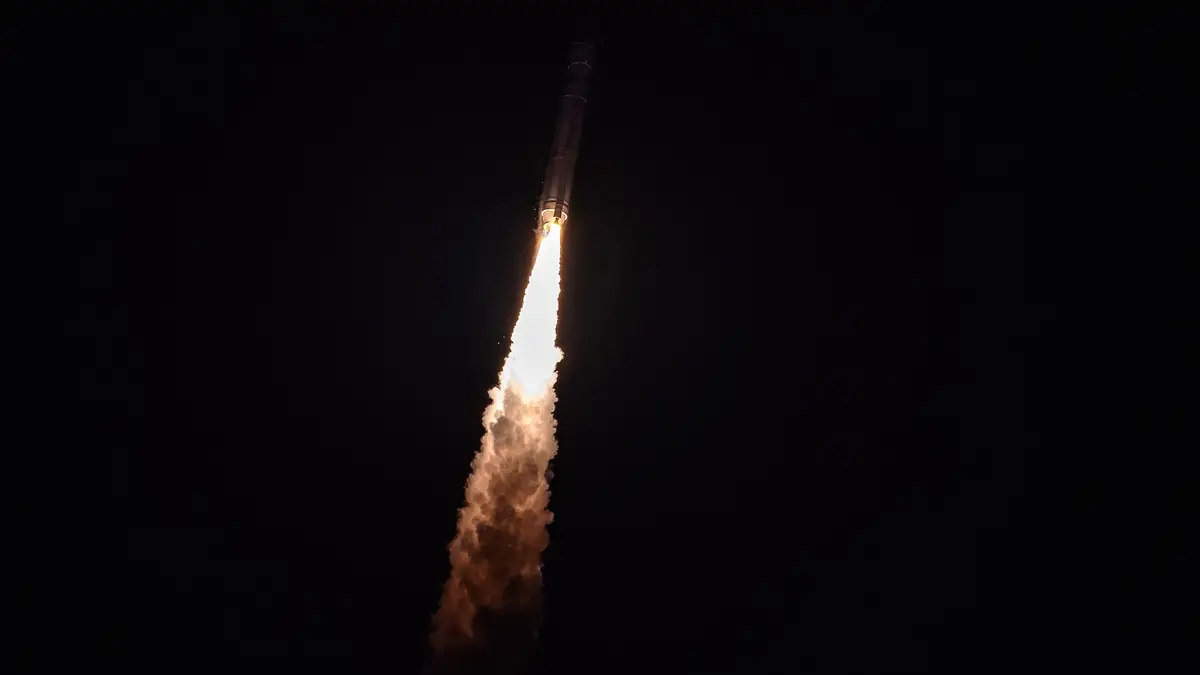
United Launch Alliance (ULA) said on October 28 that its Vulcan rocket will return to flight on Friday, November 13, pending range approval, ending a roughly nine-month grounding caused by problems with its solid rocket boosters (reported, Spaceflight Now). The mission, Vulcan Leo 1 (LV-01), will carry 40 Amazon Leo broadband satellites, Amazon's largest Leo payload to date (confirmed, Amazon). No launch time has been announced yet.
What happened
- The grounding: Vulcan has been on hold since its fourth flight on the USSF-87 mission in February 2026, when the nozzle on one of four Northrop Grumman-built GEM 63XL boosters failed less than 30 seconds after liftoff. A similar nozzle failure marred Vulcan's second flight. In both cases the core stage and Centaur upper stage compensated and reached the intended orbits (reported, Spaceflight Now).
- The fix: a team of ULA, Northrop Grumman and the U.S. Space Force identified "several potential contributors" that ULA says were mitigated through nozzle design and process changes. The boosters on LV-01 use the improved nozzle, and further testing and analysis will continue in parallel with the mission (confirmed, ULA statement via Spaceflight Now; Amazon).
- The configuration: LV-01 flies the most powerful VC6L version, with six side-mounted solid boosters for the first time, a LEO-optimized Centaur V upper stage and a long 70-foot payload fairing, from Space Launch Complex-41 at Cape Canaveral (confirmed, ULA; Amazon).
- The backlog: it is the first of 38 Vulcan launches Amazon has contracted, after eight Amazon deployment missions on Atlas V (confirmed, ULA). Amazon says a second Vulcan for LV-02 is already being prepared in parallel, and Spaceflight Now reports nearly 400 Amazon Leo satellites are already in orbit.
- Still open: Spaceflight Now says it has asked the Space Force what work remains before Vulcan is cleared again for national security payloads; no answer had been published at the time of its report.
Why it matters for space investors
A clean flight would restart one of the largest launch backlogs in the industry and give Amazon a high-capacity ride for its constellation, which has also flown on Ariane 6 and Falcon 9. ULA is a private Boeing–Lockheed Martin joint venture, so the listed exposure runs through Boeing and Lockheed Martin, while booster supplier Northrop Grumman has its redesigned GEM 63XL nozzle on the line. Another booster anomaly would raise fresh questions for both Amazon's deployment pace and Vulcan's national security manifest. We will track the date on our launch calendar.
Not financial advice.