Telesat faces C$2.4B GEO debt deadline as Lightspeed backlog hits C$5.6B
Telesat (TSAT) has about five weeks before C$2.4B of GEO debt falls due on 6 December, while Q3 revenue fell 20% to C$81M and its Lightspeed LEO backlog reached C$5.6B.

Telesat (Nasdaq and TSX: TSAT) reported third-quarter results on 29 October 2026, and the numbers show a company split in two. Its legacy geostationary (GEO) business is shrinking and has to refinance its debt, while its Lightspeed low-Earth-orbit network is building up a large backlog. Payload reports that C$2.4 billion (about US$1.7 billion) of GEO debt is due on 6 December. All figures below are in Canadian dollars.
What happened
- Q3 results: revenue fell 20% to $81 million, adjusted EBITDA fell 74% to $12 million, and the net loss widened to $157 million from $121 million a year earlier (confirmed, Telesat). Adjusted EBITDA included $25 million of debt-refinancing costs.
- GEO keeps shrinking: GEO revenue fell 21% to $79 million after lost or reduced broadcast contracts and retired satellites. GEO satellite utilisation was about 59% (confirmed, Telesat). Telesat reiterated 2026 GEO guidance of $300–320 million revenue.
- Lightspeed grows: LEO backlog was about $5.6 billion at 30 September, against about $779 million for GEO. The constellation is now planned at 225 satellites, helped by a $2.7 billion agreement (including options) with Canada's Defence Investment Agency, and Telesat says Lightspeed is fully funded (confirmed, Telesat). It cut 2026 Lightspeed spending guidance to $1.1–1.3 billion to reflect payment timing.
- The debt: CEO Dan Goldberg said advisers "continue to seek good-faith engagement" with GEO debtholders and are evaluating "other alternatives" (confirmed, Telesat). Payload reports that Telesat GEO owes about $3 billion maturing through October 2027 but holds about $287 million in cash, and that its filing again warned of "substantial doubt" about the GEO business continuing (reported).
- Lender offers: according to Payload, a lender group including Silver Point, GoldenTree and Sound Point has made at least two rescue offers. The 14 October offer would repay lenders through $1.7 billion of new equity and a $1.5 billion loan, with shareholders invited to buy new shares at $31.50 (reported).
- Timing: Payload reports that full global Lightspeed service slipped three months to the end of Q2 2028, while Arctic service, including for the Canadian military, stays at the end of Q1 2028 (reported).
Why it matters for space investors
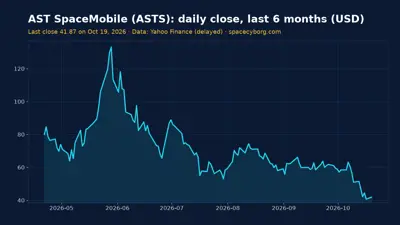
Telesat is the clearest test yet of what happens when an old GEO fleet cannot fund the move to LEO by itself. Lenders are suing over the 2025 transfer of 62% of Lightspeed into a subsidiary that does not guarantee the GEO debt, and Telesat denies wrongdoing (reported, Payload; the litigation is also listed as a risk in Telesat's release). Whatever happens on 6 December, a large equity issue would dilute existing shareholders, while a default would test an unusual 1991 Canadian law that Payload says shields Telesat Canada from normal insolvency rules. Other operators betting on new constellations, such as AST SpaceMobile, are worth comparing with how Telesat keeps the two halves of its business apart. Our satcom market outlook explains why data is replacing the video revenue that GEO relied on.
Not financial advice.