Virgin Galactic unveils spaceship Apeiron, pushes first commercial flight to early Q2 2027
Virgin Galactic flew its first Delta-class spaceship, Apeiron, to Spaceport America on October 28 and now expects commercial flights in early Q2 2027, its second schedule slip this year.
Virgin Galactic (NYSE: SPCE) named its first next-generation spaceship Apeiron on October 28 and flew it the same day, mated to the carrier aircraft Eve, from its factory in Mesa, Arizona, to its operations base at Spaceport America, New Mexico (confirmed, Virgin Galactic). The company also confirmed that commercial spaceflights are now expected to begin in early Q2 2027.
What happened
- Name and ferry flight: Apeiron, ancient Greek for "boundless", was picked by a public vote with participants from more than 80 countries. Eve departed Phoenix-Mesa Gateway Airport at 10:29 a.m. MST and landed at Spaceport America at 12:59 p.m. MDT (confirmed, Virgin Galactic).
- What comes next: engineers will finish avionics software integration and validation and prepare a flight-test programme at Spaceport America before flying customers (confirmed, Virgin Galactic).
- New timeline: in its October 26 update the company moved the first commercial flight to early Q2 2027 and said the second spaceship should enter service in late Q2 or early Q3 2027, citing extra time for "exhaustive" avionics software testing (confirmed, Virgin Galactic). Payload reports this is the second delay this year: the target was Q4 2026 as recently as May and February 2027 from August.
- Customers: more than 100 ticket holders are moving into their first phase of flight readiness, with more cohorts to follow (confirmed, Virgin Galactic).
- The design case: each ship in the new fleet is designed to fly twice per week with a vehicle lifetime of more than 500 missions; assembly of a static test article and the second spaceship is underway (confirmed, Virgin Galactic).
Why it matters for space investors
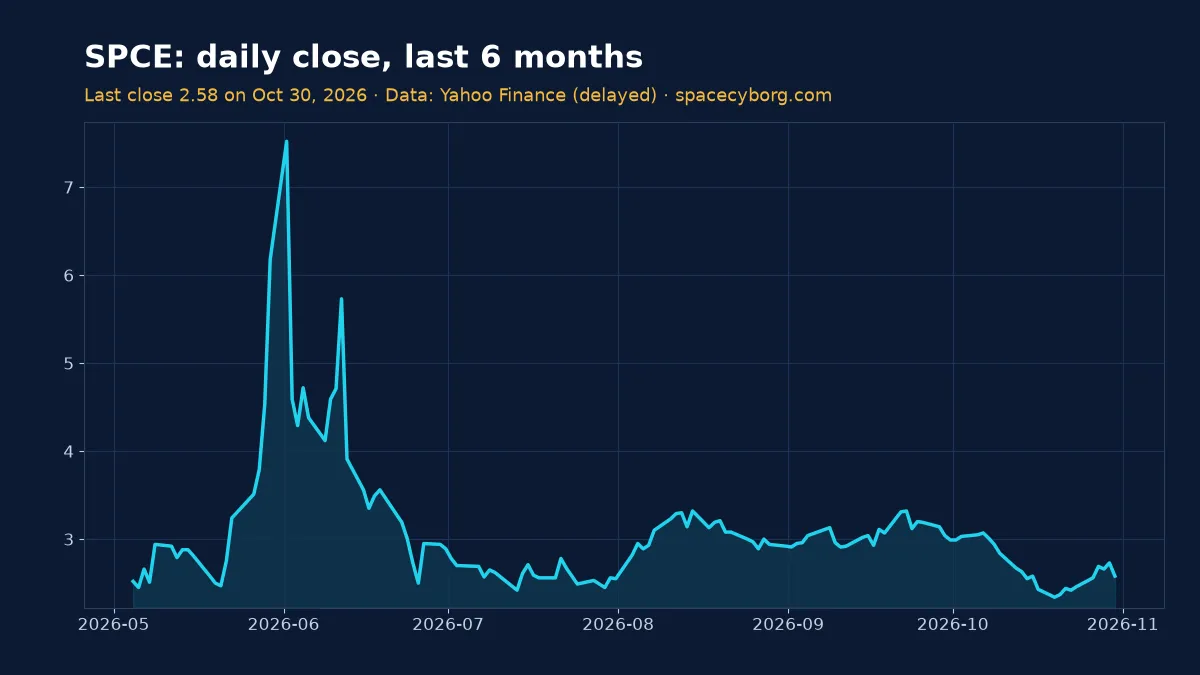
Virgin Galactic has not flown to space since VSS Unity's last mission in June 2024 and has almost no revenue until the new ships fly (reported, Payload). Payload notes that cash and marketable securities were $286 million at the end of June, against an expected Q3 burn of $95–100 million, and that the Q2 report flagged substantial doubt about the company's ability to continue operating. Every quarter of slip therefore matters for funding needs and possible dilution. On the upside, Blue Origin paused New Shepard in January, which would leave Virgin as the only crewed suborbital option once Apeiron flies (reported, Payload). Virgin says it will give more programme detail on its Q3 2026 earnings call in November; follow the stock on our SPCE page.
Not financial advice.